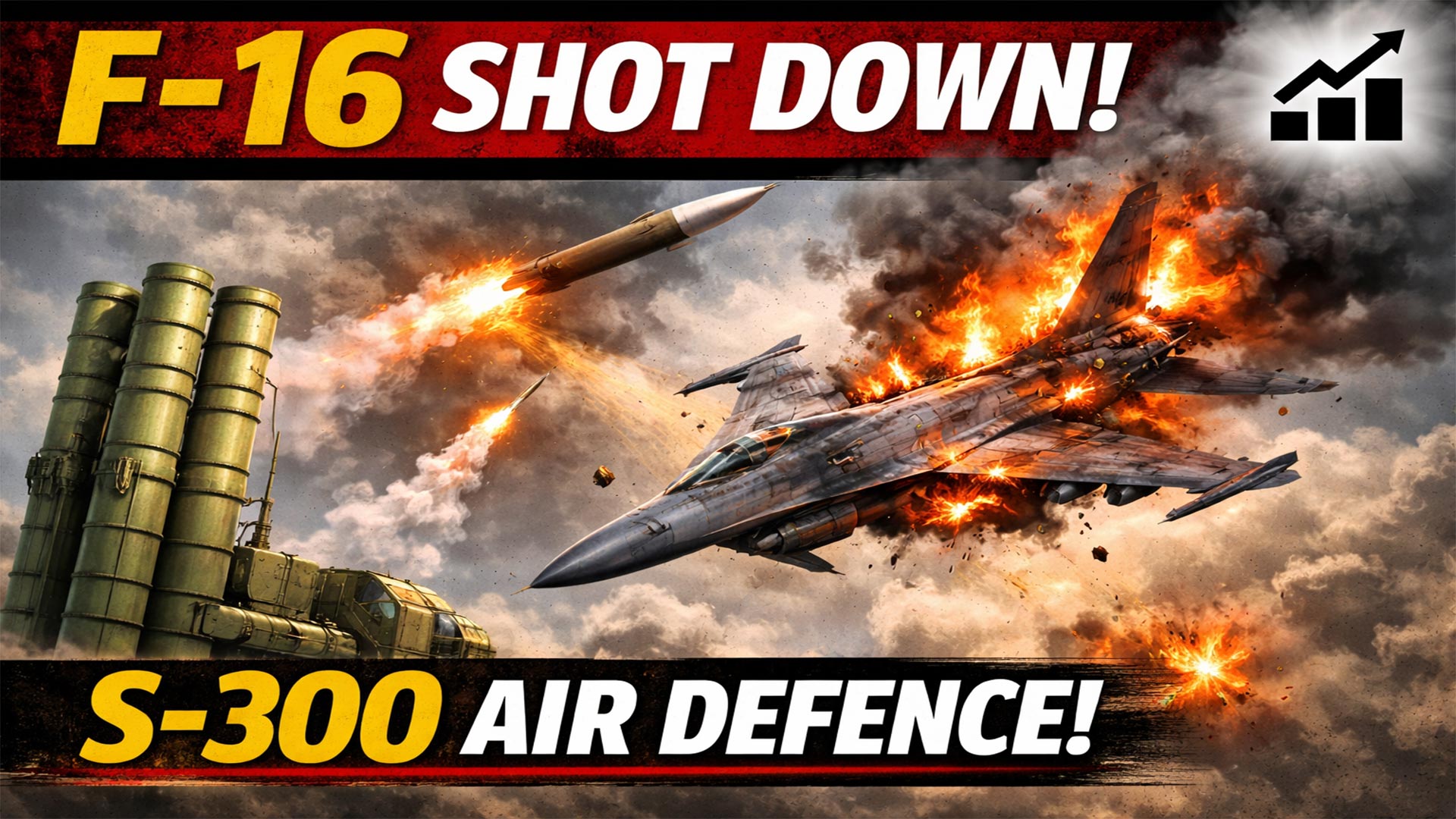
F-16 Destroyed as Russian: Russian sources claim a Ukrainian F-16 fighter jet was shot down by an S-300 missile system, a report that Ukraine’s military has dismissed as disinformation. While Ukraine acknowledges that F-16s are crucial to its air defense and have delivered notable successes, it has not confirmed any such loss. Separating facts from propaganda remains difficult amid the ongoing conflict.
In early January 2026, Russian state-aligned media and military sources claimed that a US-made F-16 fighter jet operated by the Armed Forces of Ukraine (AFU) was shot down during combat operations. The claim quickly sparked debate and prompted calls for independent verification amid the ongoing Russia–Ukraine war.
According to these reports, a Russian military commander identified only by the callsign “Sever” described how an S-300 surface-to-air missile system allegedly detected and engaged the Ukrainian-operated F-16. The commander claimed that two missiles were launched one to damage the aircraft and a second to destroy it completely.
Speaking to state-aligned outlets, the commander said the operation was deliberately planned and precisely executed, portraying the strike as evidence that Western-supplied aircraft are no more survivable than others on the battlefield.
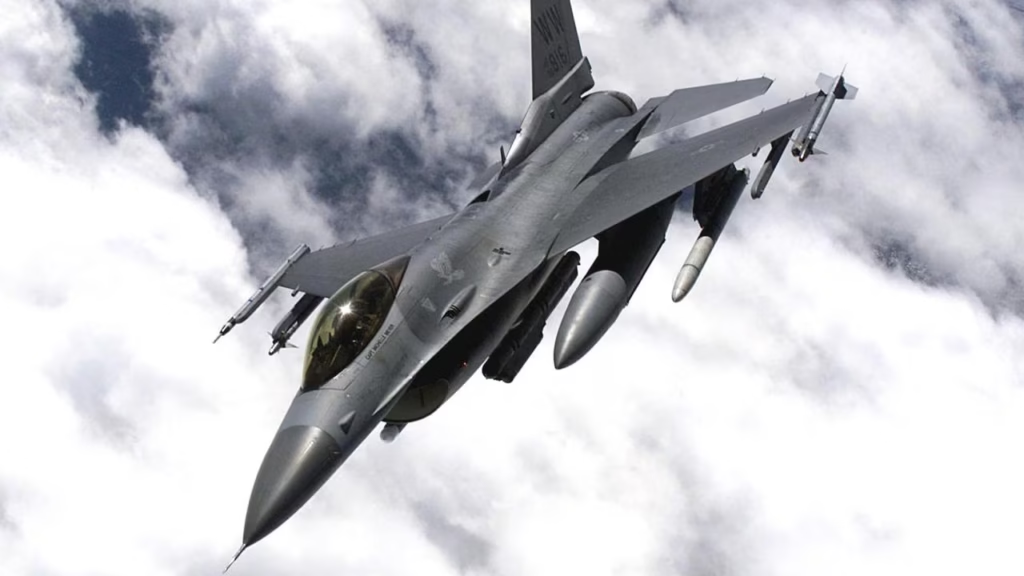
The F-16 Fighting Falcon is a fourth-generation, multi-role combat aircraft supplied to Ukraine by Western partners, including the United States and several European allies, beginning in August 2024 to strengthen Kyiv’s air-defense capabilities and enhance its ability to conduct counter-strike operations.
Ukrainian Response: F-16 fighter jet
Ukraine’s military has not confirmed the Russian account of the incident. Instead, similar claims circulating on social media and Russian-affiliated channels were dismissed as disinformation by the Center for Countering Disinformation under Ukraine’s National Security and Defense Council (NSDC). The NSDC stated that Russian sources have repeatedly published unverified or false reports alleging F-16 losses, many of which Ukrainian officials have publicly refuted in recent months.
Ukraine’s Air Force further stressed that its F-16 pilots remain operational and continue to carry out assigned missions. Officials also underscored the aircraft’s primary role in air-defense operations such as intercepting missiles and drones rather than engaging regularly in air-to-air combat.
F-16 fighter jet in the Ukraine War
Since their introduction, F-16 fighter jets have become a key element of Ukraine’s air-defense architecture, complementing aging Soviet-era platforms and helping to close critical gaps in counter-air operations. Ukrainian pilots have credited the aircraft with intercepting large numbers of incoming Russian missiles and drones during major offensives, including what officials described as “historic” achievements—such as shooting down multiple cruise missiles during a single sortie.
Ukraine’s Air Force has also acknowledged the operational challenges involved in integrating Western aircraft into the conflict. Officials have noted the need to adapt NATO-style tactics to a battlefield dominated by dense missile threats, leading to the development of new combat methods tailored specifically to high-intensity, missile-heavy engagements.
Conflicting Reports
Separating verified information from propaganda remains especially challenging in the Ukraine conflict, where both sides conduct information operations alongside active military engagements. Russian claims regarding downed F-16 aircraft are not new and mirror earlier assertions made during the war, several of which were later disputed by Ukrainian authorities and independent analysts due to a lack of corroborating evidence.
At the same time, confirmed incidents indicate thatF-16 fighter jet losses have occurred in combat under specific circumstances. In some earlier cases, Ukrainian pilots were killed when their aircraft were brought down during high-intensity missions, events that were generally attributed to Russia’s dense missile and air-defense environment rather than isolated air-to-air encounters.